
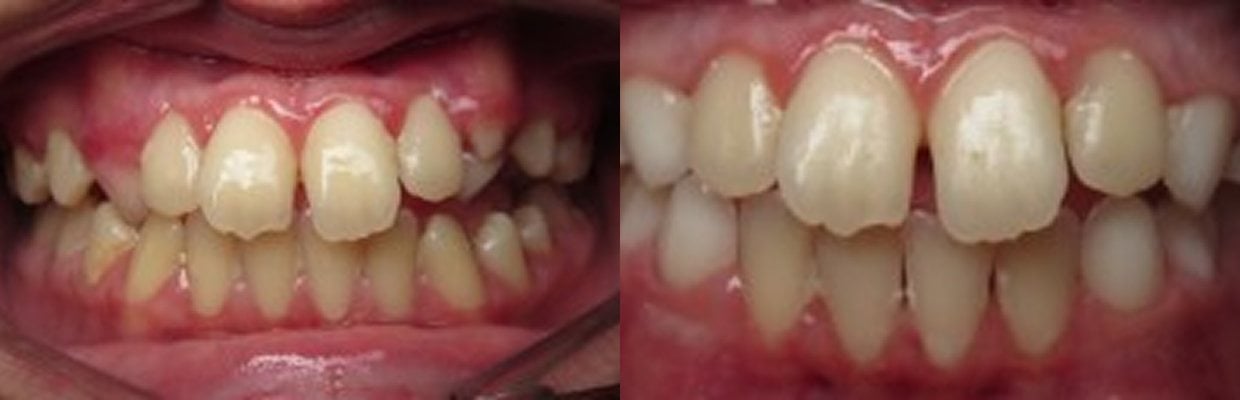
Sometimes, yes. Treating one arch — usually the top — can work when the bite already fits well and the problem is limited to mild crowding or spacing in the teeth that show. When the bite is off, moving only the upper teeth changes how the arches meet and can create a new problem while solving an old one.
What Is Single-Arch Treatment?
Single-arch (or one-arch) treatment means Invisalign clear aligners or braces on the upper teeth only, or the lower teeth only, instead of both. The appeal is obvious: the top teeth are the ones you see when you smile, and treating half the mouth sounds like less time and less cost.
Why it is even possible
Teeth do not have to move in matched pairs. If the upper and lower arches already meet correctly, small upper movements can be made without disturbing that relationship. That is the narrow window single-arch treatment lives in.
Why it is not the default
Orthodontics is bite-driven. Your teeth are one half of a hinge; the other half is the opposing arch. Change one side of a hinge and the fit changes. That is why an evaluation looks at how the teeth come together, not only at how they look from the front.
When Is Treating Only the Top Teeth a Reasonable Option?
Mild crowding or spacing, with a bite that already works
A small rotation, a slight overlap, or a gap between the upper front teeth in someone whose back teeth interlock properly is the classic candidate. The movements are minor and the bite is not asked to change.
Minor relapse after previous treatment
Adults who had braces years ago and drifted after retainer wear stopped are often good candidates, because the bite was corrected once and usually still holds. We covered why that drift happens in our post on teeth shifting after braces.
A cosmetic tune-up before restorative work
When a dentist plans veneers or a crown and wants a tooth uprighted or a space redistributed first, limited upper movement is sometimes exactly the right amount of orthodontics.
When Is Single-Arch Treatment a Bad Idea?
When the bite is the actual problem
Deep bite, open bite, crossbite, significant overjet, or an underbite are bite relationships. They cannot be corrected by moving one arch, and treating only the top can deepen the mismatch.
When there is not enough room
Meaningful crowding needs space, which comes from expanding the arch, creating room between teeth, or in some cases removing a tooth. Making room only up top can push the upper teeth forward into an overjet that did not exist before.
When the lower teeth are the crowded ones
Lower front crowding is one of the most common adult complaints. Straightening only the upper arch does nothing for it, and the finished result rarely matches the picture people had in mind.
When retention will not hold it
Teeth that are held in place by a bite that fits stay put more easily. Teeth finished into an imperfect bite depend far more on retainer discipline, and relapse is more likely.
What Happens to the Bite If Only One Arch Moves?
Three things can shift. First, contact: teeth may meet on fewer points, concentrating force where it was previously spread. Second, overjet and overbite: pushing the upper teeth forward or back changes the horizontal and vertical overlap. Third, wear. Uneven contact over years shows up as flattened or chipped edges, and sometimes as jaw soreness.
The part patients feel first
Most people notice function before appearance — food catching, an edge that hits first, or a bite that feels “off” when they close. Those are the symptoms that bring people back in.
Single-Arch vs. Full Treatment: How They Compare
| Consideration | Single-arch (top only) | Both arches |
|---|---|---|
| Best for | Mild upper crowding or spacing with a bite that already fits | Crowding, spacing and any bite correction |
| Effect on the bite | Bite must stay as it is | Bite is corrected as part of the plan |
| Typical length | Often shorter | Set by case complexity |
| Lower-arch crowding | Not addressed | Addressed |
| Risk of a new bite issue | Real if the case is misjudged | Planned for from the start |
| Retention | Retainer still required | Retainer still required |
How Do We Decide at Your Consultation?
Records before recommendations
We take a digital scan with our iTero scanner instead of putty impressions, along with photos and the imaging your case needs. That gives us your bite in three dimensions rather than a guess from the front.
Then a plain answer
Dr. Maslowski or Dr. Michel will tell you whether single-arch treatment fits your case, what it will and will not fix, and what full treatment would add. If limited treatment is genuinely enough, that is what we will say. Our before-and-after cases show the range of what full correction looks like.
What treatment costs depends on the case
Fees track complexity and length, not simply how many arches are involved, and a shorter plan is not automatically a cheaper one. We go through the numbers for your specific plan at the consult, and our guide to Invisalign cost explains what drives them.
What About Straightening Only the Bottom Teeth?
It is asked less often, and it is harder
Lower-only treatment comes up when someone has crowded lower front teeth and is happy with their upper smile. It runs into the same hinge problem from the other direction: the lower teeth have to fit behind and beneath the upper ones. Move them without accounting for that and the bite can end up deeper or the front teeth can hit edge to edge.
Space is tighter down there
The lower arch is smaller, the front teeth are narrow, and the room available for crowding relief is limited. That is why lower crowding is often the case that turns into full treatment after an exam, even when the patient came in asking for something quick.
The upside
When the bite genuinely allows it, lower-only treatment can resolve the crowding most adults are self-conscious about while chewing and speaking stay exactly as they are. It is not off the table — it is simply a decision that follows the records.
What Happens Before, During and After Limited Treatment
Before: photos, scan and a written plan
Nothing starts until the plan is on paper. That plan states which teeth will move, how far, and what your bite will look like at the end, so there are no surprises at the halfway point.
During: shorter visits, same discipline
Limited treatment still depends on wear time if you are in aligners, and on keeping your regular dental cleanings. Twenty-two hours a day is the standard, and it does not relax because the plan is small.
After: retention for life
Every finished case gets a retainer plan. Limited cases are no exception, and skipping retention is the fastest way to end up back where you started — usually within a year or two.
Frequently Asked Questions About Top-Teeth-Only Treatment
Is Invisalign on top teeth only faster than full treatment?
Often, because there are fewer movements to make. Speed depends on how far the teeth have to travel and how consistently aligners are worn, not on the number of arches alone.
Can I start with the top arch and add the bottom later?
Sometimes, and it is a fair question to ask at your consult. It has to be planned that way from the start, because upper movements made without the lower plan in mind can be hard to build on.
Will insurance treat single-arch treatment differently?
Orthodontic benefits are usually written as a lifetime maximum for orthodontic treatment rather than per arch. Our team will verify your specific plan before you decide.
Do I still need a retainer if only my top teeth moved?
Yes. Any tooth that has been moved will try to drift back, and retention is what prevents it.
Can clear aligners fix a crossbite on just the upper arch?
A crossbite is a relationship between the arches, so it is evaluated as a bite problem. Some cases respond to aligners, some need expansion or braces, and it is not something to decide from a photo.
Find Out What Your Bite Actually Needs
A free consultation at Vivid Orthodontics answers the top-teeth-only question properly, with a scan instead of an opinion. We see patients in Oshkosh, Appleton and Wautoma — call or text (920) 231-4923, or start online with a virtual consult or a free consult request.