
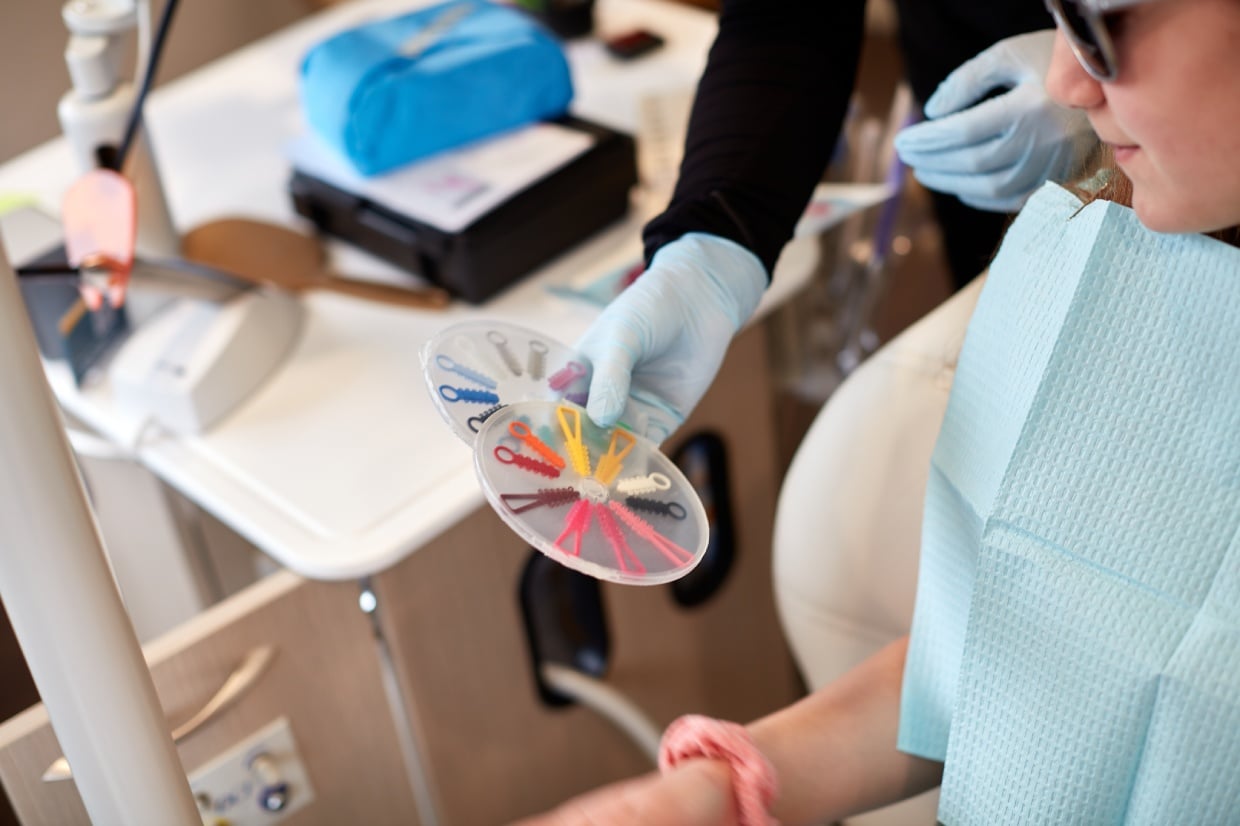
At a braces adjustment appointment, the orthodontist checks how your teeth have moved, swaps or reshapes the wire, adds elastics or chains if needed and puts on fresh ties. Most visits are short, and any soreness afterward usually fades within a few days.
People often call these visits “getting your braces tightened,” and the name makes them sound worse than they are. An adjustment is simply the step that keeps your teeth moving toward the plan your orthodontist designed. Here is what happens during the visit, why it matters and how to feel good afterward.
Why Do Braces Need to Be Adjusted?
Braces move teeth with a light, steady force. The archwire is shaped to the position your teeth are heading toward, and as it tries to return to that shape it guides each tooth along. Over the weeks after a visit, the teeth follow the wire and the force gradually drops off.
An adjustment restores that force. Early in treatment, thin and flexible wires do the work of leveling and aligning. Later, thicker and stiffer wires take over to control the roots and fine tune the bite. Each visit moves you one step further through that sequence, which is why keeping appointments on schedule matters so much.
What Happens at an Adjustment Appointment, Step by Step?
Every visit is tailored to where you are in treatment, but most follow the same general pattern.
- The ties come off. The small elastic ties or wire ties holding the archwire to each bracket are removed, and the wire is usually taken out.
- Progress check. The orthodontist looks at how the teeth have moved since the last visit and compares that with the treatment plan.
- Brackets and gums are inspected. Loose brackets are re-bonded, and the team looks for plaque buildup or swollen gums around the braces.
- The wire is changed or reshaped. You may get a new, stiffer wire, or the current wire may be bent to fine tune specific teeth.
- Add-ons when needed. Power chains close spaces, springs open room, and rubber bands may be started to correct how the upper and lower teeth meet.
- New ties and instructions. Fresh ties go on, and you leave knowing what to do until the next visit, including any elastic wear.
If you have traditional metal braces, the new ties are a chance to have some fun. Vivid Orthodontics offers the option to personalize metal braces with colorful elastics, and many patients pick new colors for holidays, school colors or a favorite team.
How Often Are Braces Adjusted?
Most braces patients are seen every several weeks, though the exact spacing is set by your orthodontist and can change during treatment. Early stages, when flexible wires are doing slow and steady work, may allow a longer stretch between visits. Stages that involve closing spaces, adding elastics or detailing the bite may call for visits closer together.
The type of braces, the complexity of the case and how well elastics are worn all affect the schedule. Our article on how long orthodontic treatment takes explains the bigger picture of what shapes total treatment time.
How Long Does a Braces Adjustment Take?
Routine adjustments are usually quick compared with the appointment when braces first go on. A simple tie change and wire check takes less time than a visit where a new wire is placed, a bracket is repositioned or elastics are introduced. Your orthodontic team can tell you when a longer visit is coming so you can plan around school or work.
For busy families, the braces page notes that Vivid Orthodontics offers flexible scheduling, appointment reminders and guidance tailored for school and sports schedules, so teen treatment stays on track with minimal disruption.
Do Braces Hurt After an Adjustment?
Braces do not typically hurt, but it is normal to feel some pressure or soreness after they are adjusted. The teeth may feel tender when you bite down, especially for the first day or two. This usually goes away within a few days, and our team provides tips and tools to manage any soreness.
Sore spots on the cheeks or lips can also show up if a new wire or bracket rubs. Orthodontic wax pressed over the bracket creates a smooth barrier while the tissue toughens up. If a wire end is poking you or a bracket comes loose between visits, our guide to handling orthodontic emergencies walks through quick fixes until you can be seen.
How Can You Stay Comfortable After an Adjustment?
A few simple habits make the first days after a visit easier. The comparison below shows what tends to help and what tends to make soreness worse.
| Situation | What helps | What to avoid |
|---|---|---|
| Teeth tender when chewing | Soft foods such as yogurt, pasta, soup, eggs and smoothies | Hard, crunchy or very chewy foods |
| General ache | Cold water or a cold compress on the outside of the cheek | Biting into whole apples or crusty bread |
| Cheek or lip irritation | Orthodontic wax over the bracket that rubs | Picking at or pushing on the wire |
| Gums feel puffy | Gentle brushing and a warm salt water rinse | Skipping brushing because teeth feel sore |
| New elastics feel tight | Wearing them consistently so teeth adapt | Taking them out to rest, which restarts soreness |
Our article on surviving your first days with braces has more ideas for soft meals and comfort that work just as well after an adjustment.
How Should You Prepare for an Adjustment Visit?
Brush and floss before you arrive so the orthodontist can see the brackets and gums clearly. Food trapped around the braces makes inspection harder and can hide early signs of gum irritation or decalcification.
Bring any elastics you have been asked to wear, and mention anything that has felt different, such as a bracket that seems loose, a wire that pokes, or a tooth that feels like it is not moving. Questions about sports, instruments or upcoming events are also worth raising. If you play contact sports, wearing a mouthguard is recommended.
What Happens If You Miss or Delay an Adjustment?
Missing a visit does not undo your progress, but it usually stalls it. Once the wire has done its work, the teeth stop moving until the next adjustment. A loose bracket or broken tie that goes unnoticed can also let a tooth drift in the wrong direction.
Repeated delays add up and can stretch total treatment time. If you need to reschedule, call or text the office as soon as you know so you can be seen as close to the planned date as possible.
How Do Rubber Bands Fit Into Adjustment Visits?
Elastics are often added at an adjustment once the teeth are aligned enough to start correcting the bite. Your orthodontist will show you where they hook on, how many hours a day to wear them and when to change them. Consistent wear is what makes them work. For a full rundown on types and wear tips, see our guide to orthodontic elastics.
Frequently Asked Questions
Can I eat normally after a braces adjustment?
Soft foods are easier for the first day or two while teeth are tender. After that, return to your usual braces friendly diet and keep avoiding hard, sticky and chewy foods.
Is it normal for braces to hurt after every adjustment?
Some pressure after each visit is normal, though many patients find it lighter as treatment goes on. It usually fades within a few days.
Do clear ceramic braces get adjusted the same way?
Yes. Ceramic braces use tooth-colored brackets with the same wire system, so adjustment visits follow the same general steps as metal braces.
Start Your Braces Journey With a Free Consultation
Our board-certified orthodontists, Dr. Maslowski and Dr. Michel, offer metal and clear ceramic braces at our Oshkosh, Appleton and Wautoma offices. Book a free consultation or call or text (920) 231-4923 to talk through what treatment and adjustment visits would look like for you.